Aerial "Tripod": The Practical Significance of Centimeter-Level Hovering for Precision Surveys
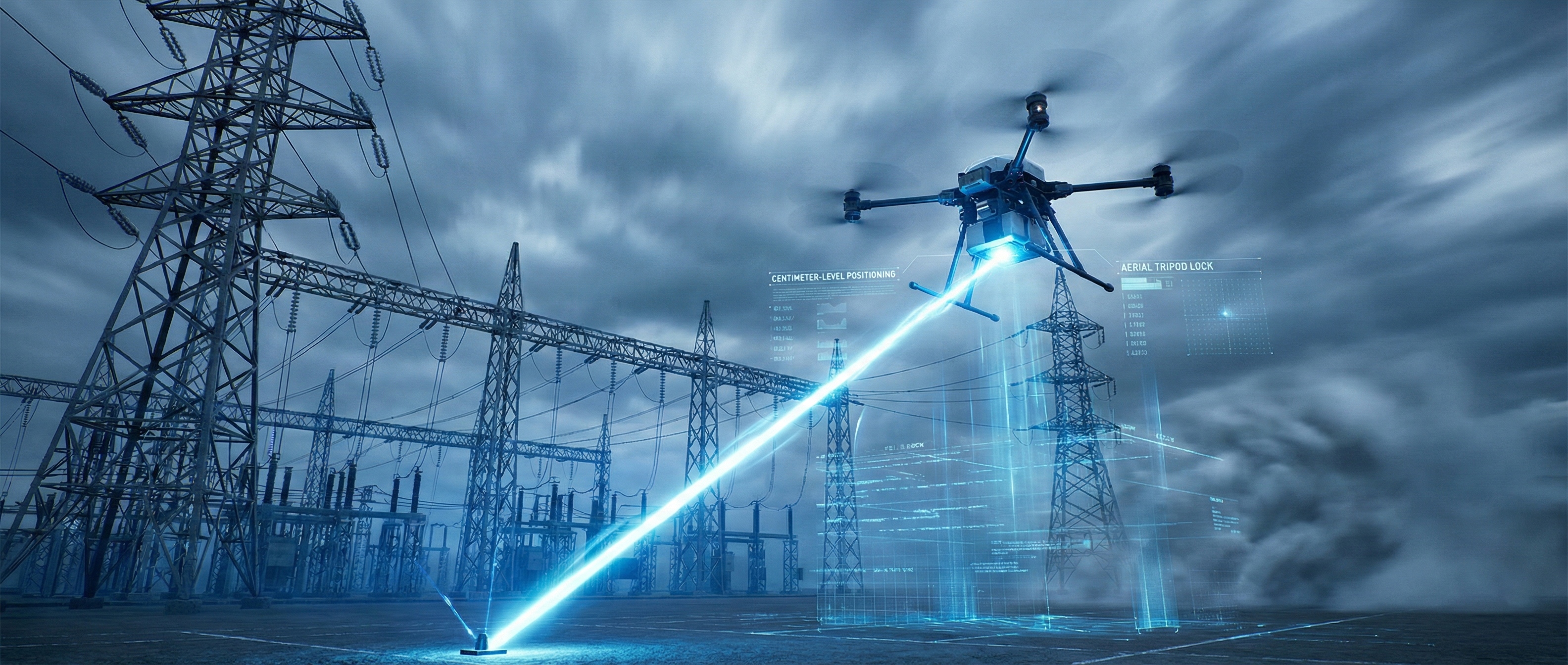
In industrial inspection and forensic investigation missions, drones serve not only as mobile visual terminals but also as exceptionally stable "aerial work platforms." Traditional flight platforms, when encountering high-altitude gusts or strong electromagnetic interference, often experience subtle physical displacements that can cause imperceptible jitter in telephoto footage. This directly impacts the accuracy of thermal imaging temperature measurement and the effectiveness of evidence collection. Consequently, achieving "physical-level" stable hovering through multi-source sensor fusion has become a core challenge in the global development of industrial aircraft, marking the transition from "being able to fly" to "flying steadily."
By deeply integrating down-facing visual perception systems with high-precision satellite positioning technology, the new generation of work platforms can now achieve centimeter-level positional locking in three-dimensional space. This level of stability means that drones operate like invisible tripods suspended in the air. Even in environments with turbulent airflow, such as power corridors or between high-rise buildings, they ensure that the camera payload remains locked on the target center. Coupled with professional-grade high-resolution thermal imaging systems, this rock-steady posture enables a qualitative shift from "dynamic capture" to "static透视" in observation, significantly enhancing the reliability of nighttime search and rescue operations and hazard identification.
This pursuit of stability essentially provides a high-quality data foundation for subsequent AI-powered intelligent processing. As Drone Industry Insights (DRONEII) noted in its industry analysis: high-precision hovering stability is a prerequisite for drones to evolve from "auxiliary tools" into "precision work terminals." Only platforms with centimeter-level displacement control capabilities can ensure highly consistent data collection in complex real-world operational environments.