Industry News

Insights and analysis on the latest developments in drone technology, low-altitude economy, and industrial applications.

6 articles
Digital safety fences for low-altitude traffic management

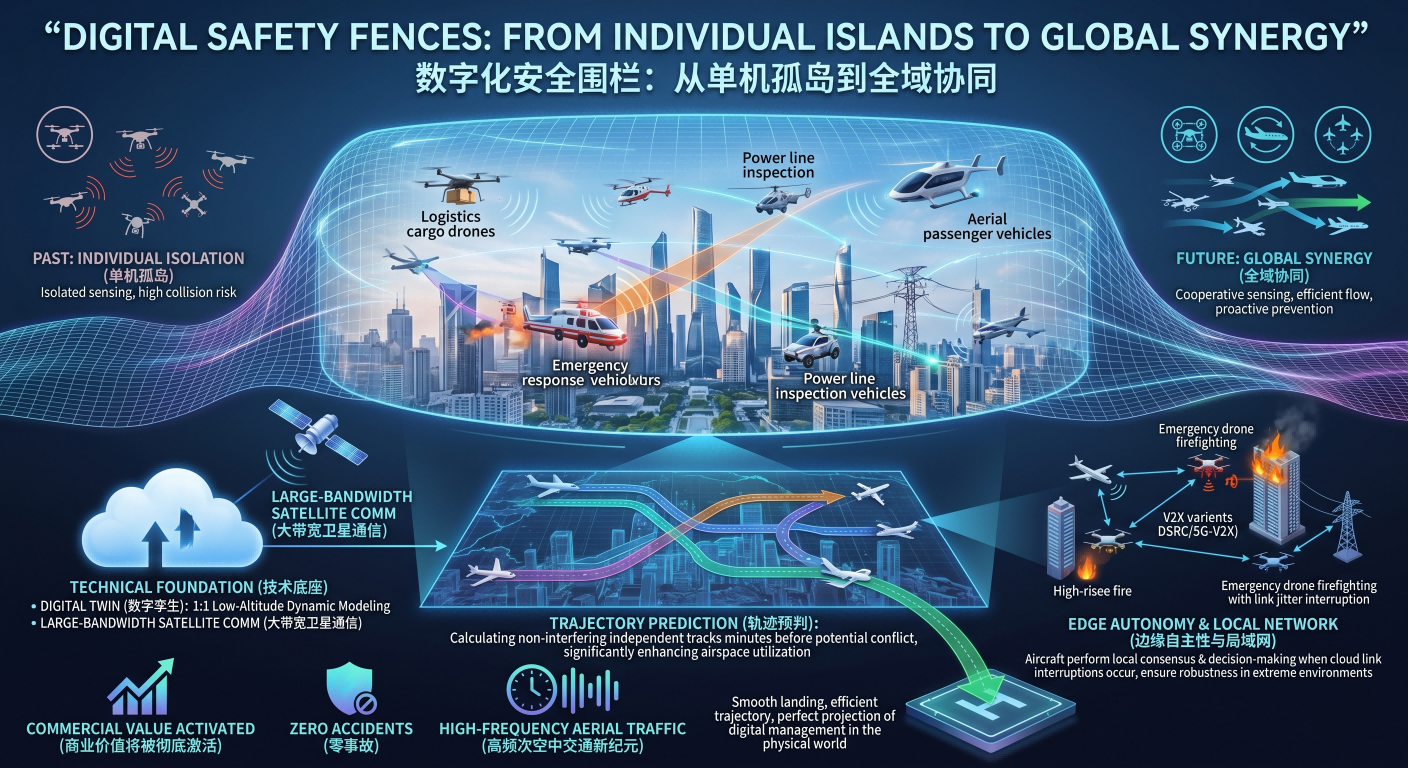
From Individual Islands to Global Synergy: "Digital Safety Fences" in Low-Altitude Traffic Management

The explosive growth of the low-altitude economy is transforming the once-silent aerial domain into a busy and complex digital transportation network. As logistics delivery, emergency response, power inspection, and future aerial passenger transport operate simultaneously above a city, traditional safety models based on visual avoidance or individual radar sensing are no longer sufficient to handle high-density traffic pressure. In this era of universal connectivity, aircraft should no longer be information islands; instead, they must become active nodes within a global airspace management system.

Read More
Electromagnetic compatibility in aerial magnetic surveys

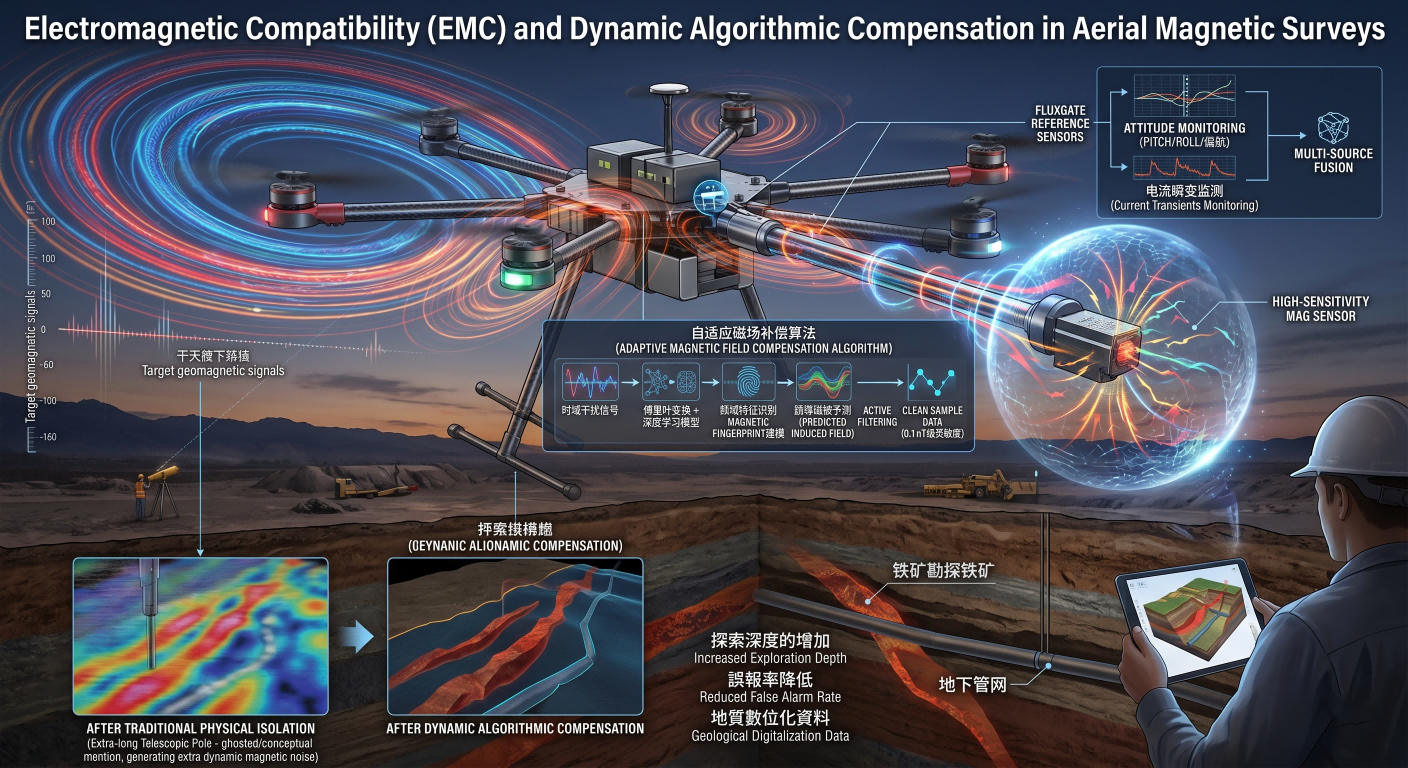
Electromagnetic Compatibility and Dynamic Algorithmic Compensation in Aerial Magnetic Surveys

In the fields of resource exploration, geological surveys, and buried pipeline detection, aerial magnetic survey technology is undergoing a paradigm shift from "large-scale" to "sub-meter precision." However, the improvement of detection accuracy is consistently constrained by a fundamental physical paradox: to capture extremely faint magnetic anomaly signals from deep underground, sensors must possess ultra-high sensitivity; yet, to achieve high-resolution imaging, the UAV platform must fly as close to the ground as possible.

Read More
Heavy-lift UAV stability in gusty environments

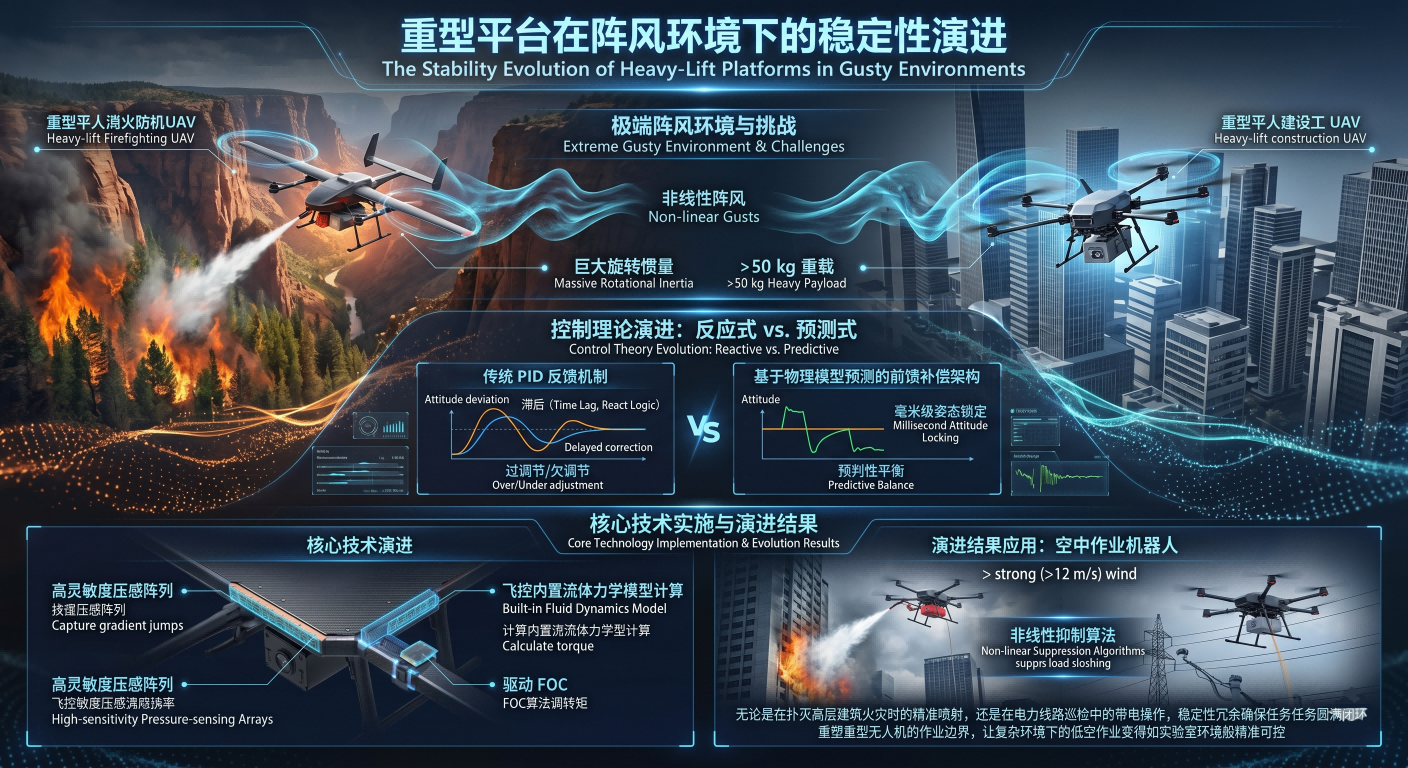
The Stability Evolution of Heavy-Lift Platforms in Gusty Environments

As heavy-lift UAVs become increasingly prevalent in emergency rescue, forest firefighting, and precision lifting, the aerodynamic challenges faced by developers have escalated. Especially in extreme environments such as deep canyons, high-rise building clusters, or offshore oil and gas platforms, unpredictable non-linear gusts pose a significant threat to flight safety. For heavy-lift platforms possessing massive rotational inertia, traditional control theories often prove inadequate when responding to sudden perturbations.

Read More
Onboard edge computing for autonomous obstacle avoidance

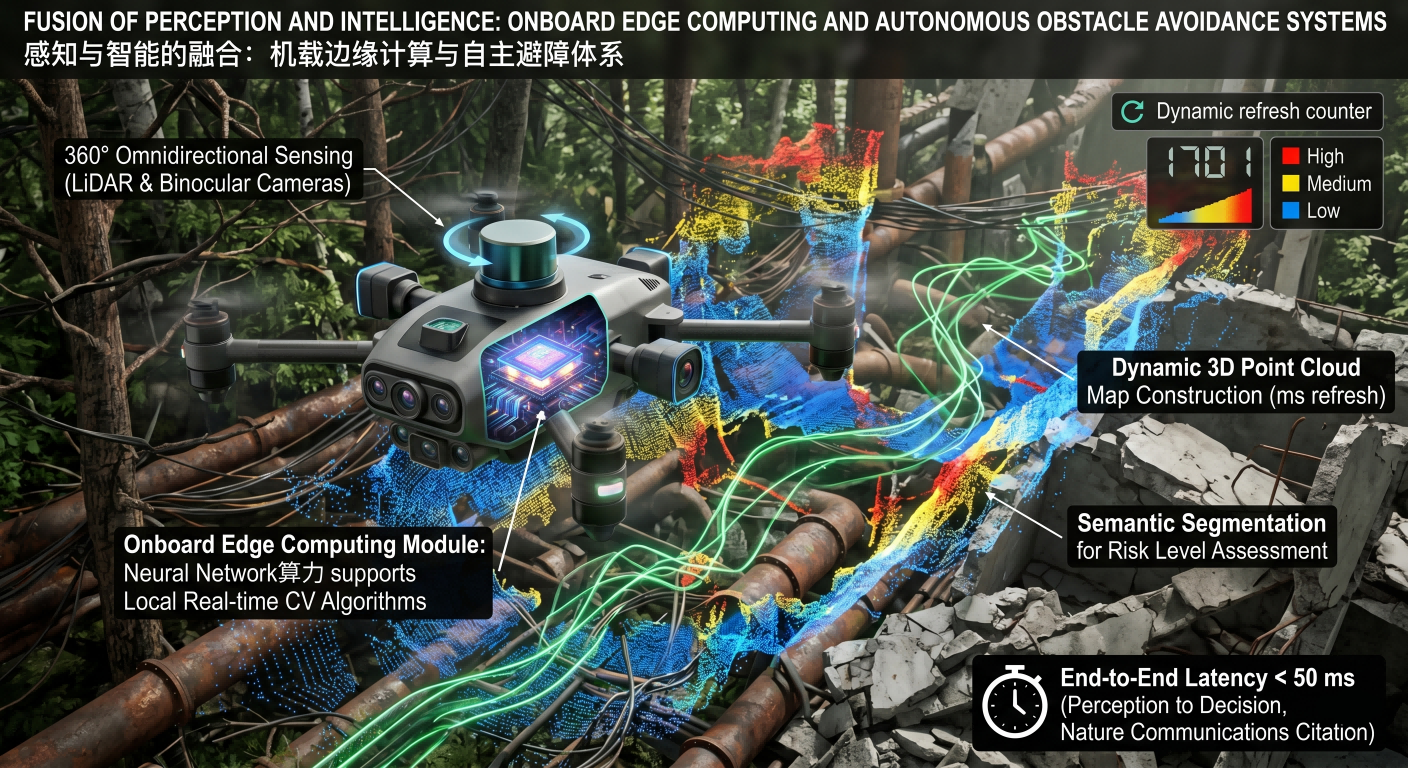
Fusion of Perception and Intelligence: Onboard Edge Computing and Autonomous Obstacle Avoidance Systems

When UAVs enter complex forests or narrow pipeline corridors, relying solely on a pilot's experience becomes insufficient. True intelligence should grant the UAV the ability to "think autonomously," completing the "perception, inference, and obstacle avoidance" loop within milliseconds. The core bottleneck is the limitation of onboard computing power. Traditional cloud computing cannot meet real-time demands due to latency.

Read More
FOC sine-wave drive for heavy-load UAV motors

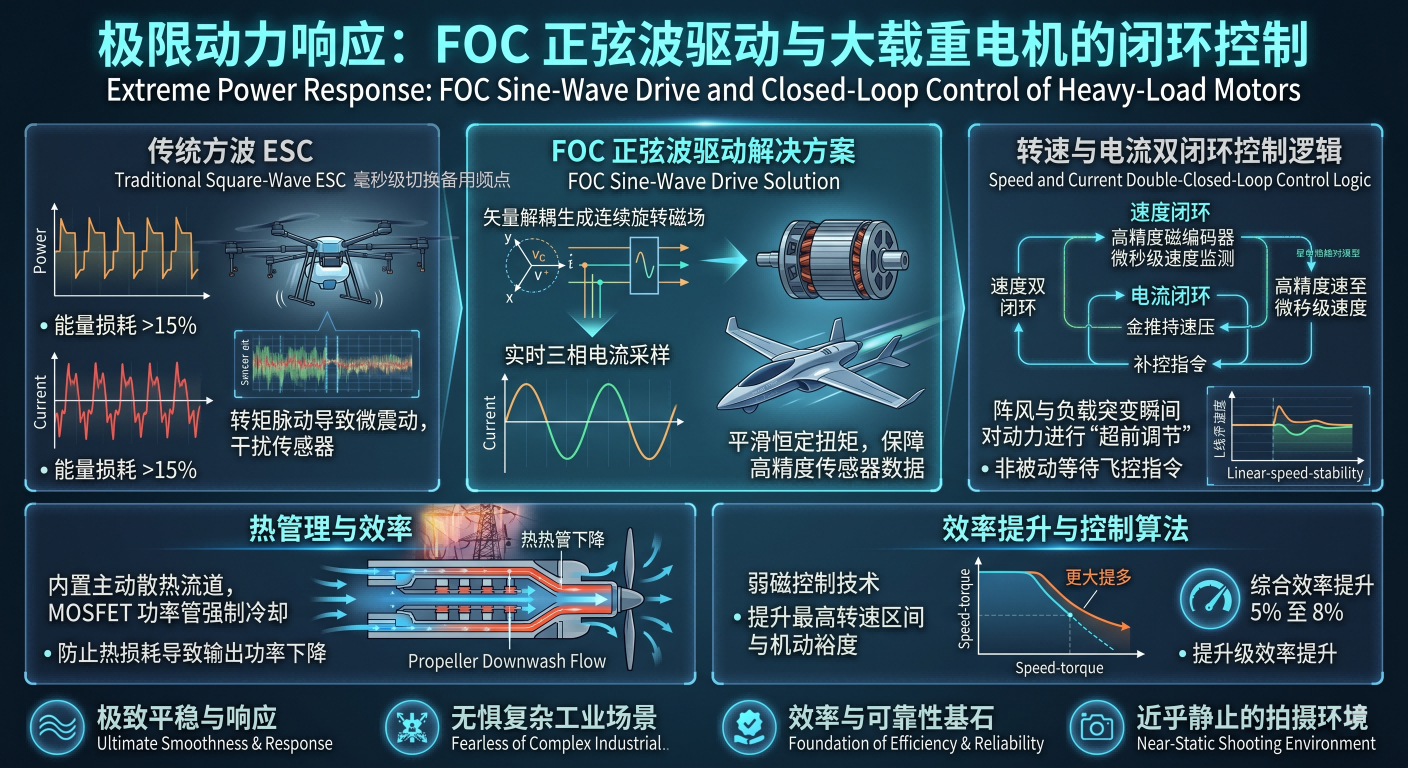
Extreme Power Response: FOC Sine-Wave Drive and Closed-Loop Control of Heavy-Load Motors

When heavy-load UAVs perform industrial missions, the stability of their power system dictates overall operational safety. Traditional square-wave drives (ESCs) generate significant torque ripple and high-frequency noise due to abrupt current switching. According to research in IEEE Transactions on Industrial Electronics, this torque ripple not only wastes over 15% of energy but also induces micro-vibrations in the airframe, interfering with the imaging quality of high-precision cameras.

Read More
Anti-interference RTK positioning in electromagnetic environments

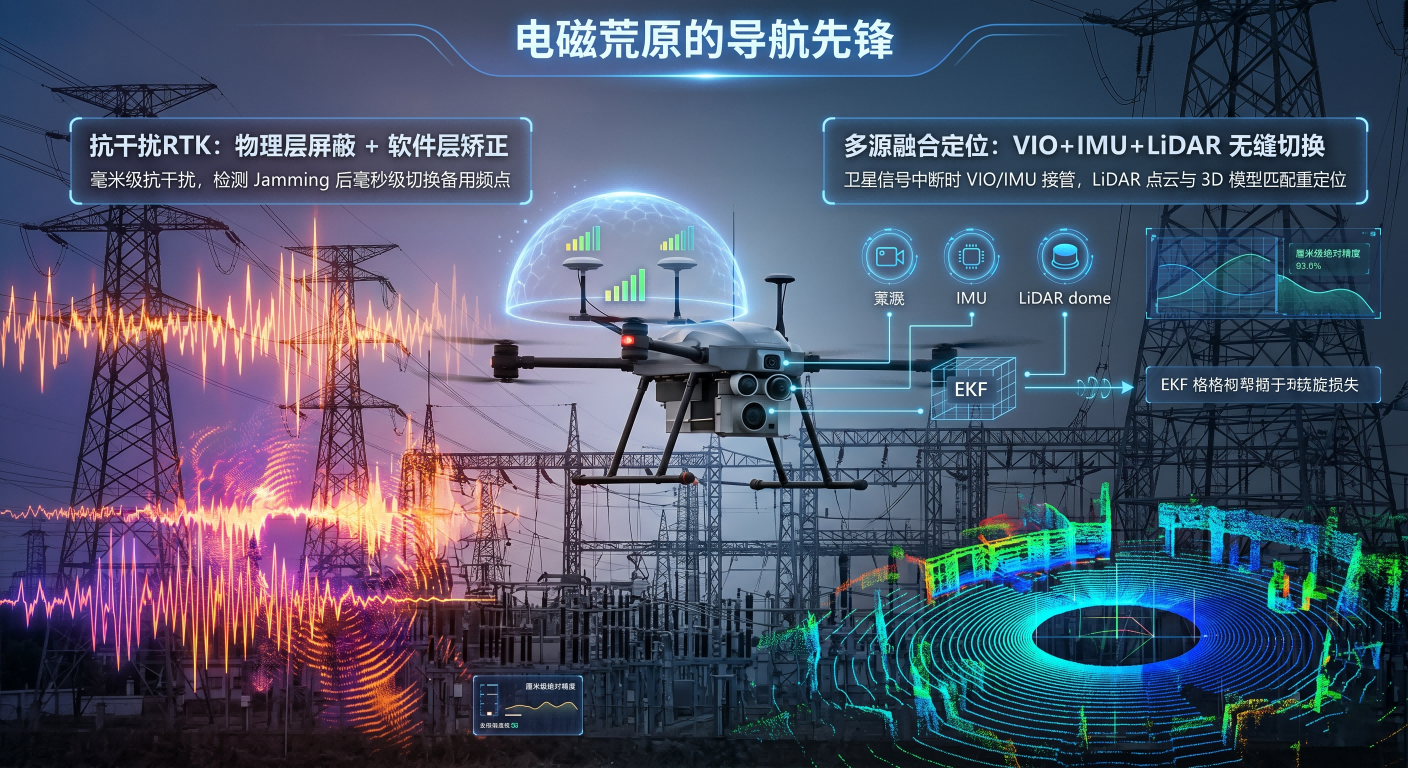
Navigation Pioneers in Electromagnetic Deserts: Anti-Interference RTK and Multi-Source Fusion Positioning Algorithms

In complex industrial environments, the primary challenge for UAVs is not flight itself, but precise positioning under extreme electromagnetic interference. Traditional GNSS are highly susceptible to multipath effects and electromagnetic noise when close to high-voltage power lines or dense metal-structured chemical plants. According to research in IEEE Transactions on Aerospace and Electronic Systems, broadband noise from high-voltage electromagnetic fields significantly reduces the signal-to-noise ratio of carrier phases, leading to positioning drift.

Read More