Competition in the Blue Ocean at 50°C: Why does the Middle Eastern market favour Vertical Take-off and Landing (VTOL) aircraft?
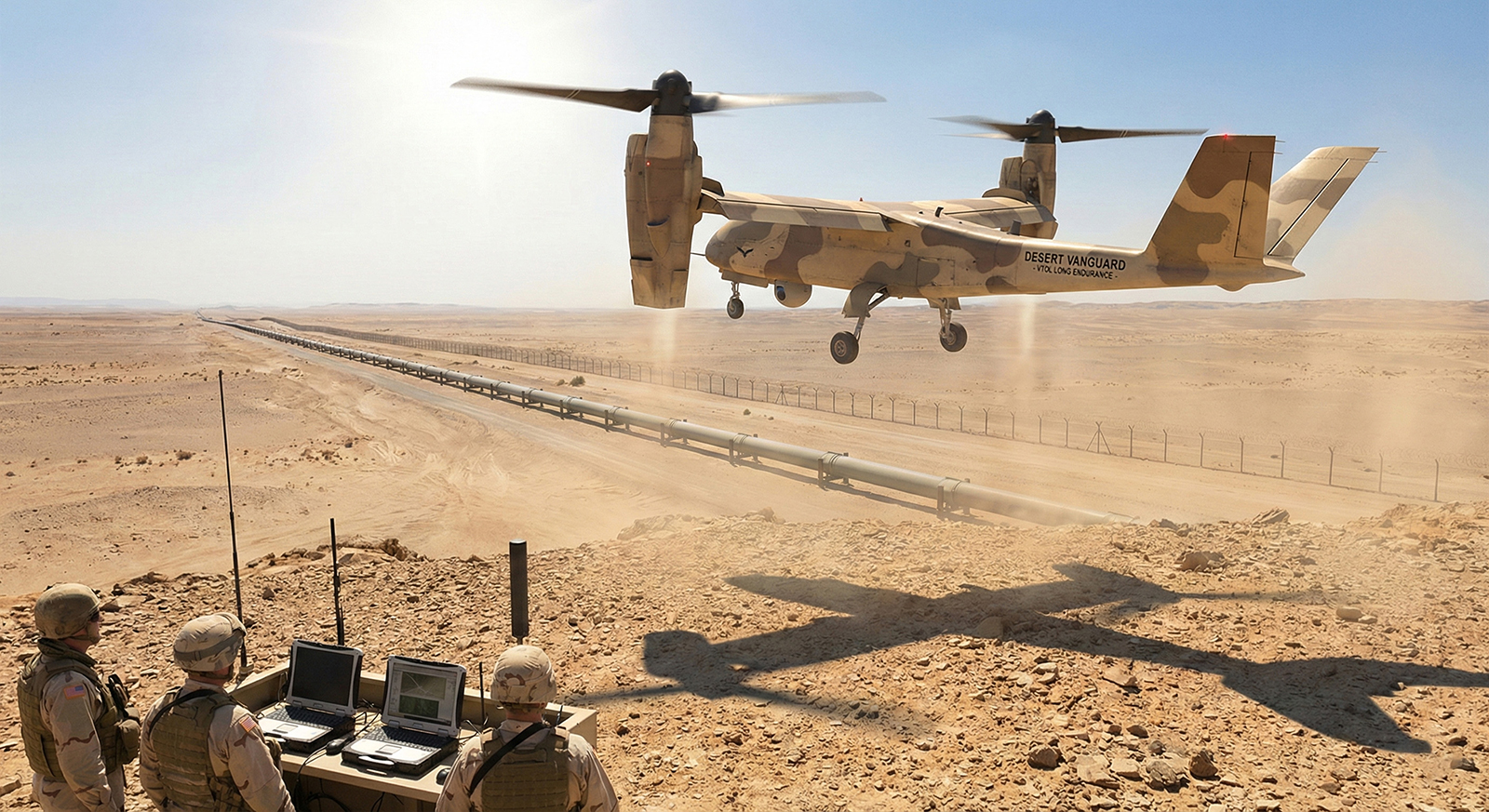
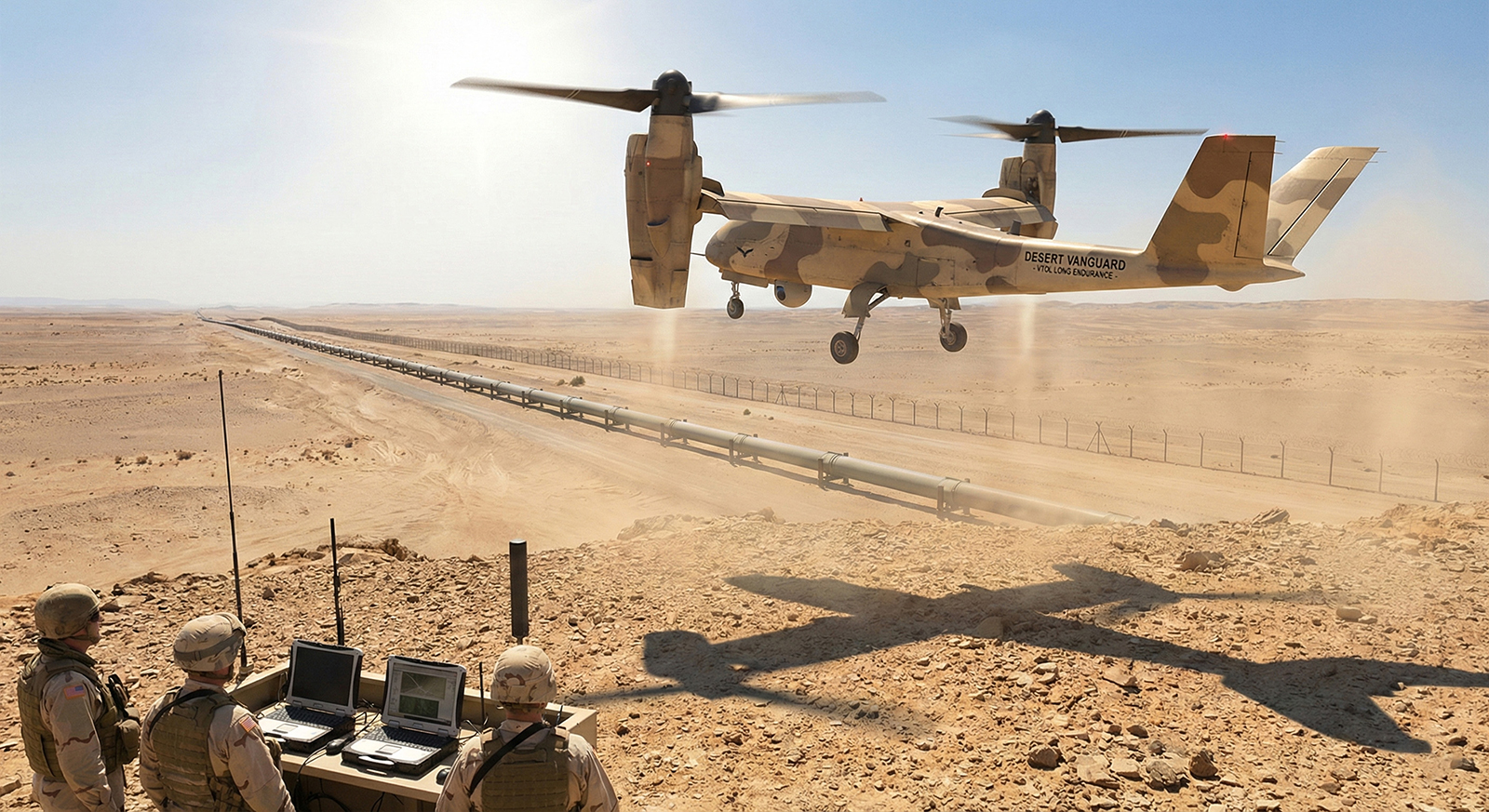
In the Middle East and Africa markets brimming with opportunities, ordinary consumer-grade drones often face the challenge of "acclimatization." The terrain and climate here impose far more stringent demands on the endurance of aircraft than those required for commercially available models. Taking the Middle East as an example, the drone market in 2026 is growing at an annual rate exceeding 17%, evolving into a typical high-value blue ocean driven by "extreme environments." What truly propels market development is not aerial photography or entertainment but the rigid demand integrated into the lifelines of national infrastructure—particularly the long-endurance automated inspection and monitoring of extensive oil and gas pipelines, power grids, and borderlines that traverse deserts and national boundaries. Here, drones are not consumer electronics but critical operational tools safeguarding energy arteries and national security.
If the global drone market is an advanced competition, then the Middle East undoubtedly represents the most challenging "extreme heat segment." According to the latest research by MarkNtel Advisors (2026), Middle Eastern customers have nearly "stringent" requirements for technology:
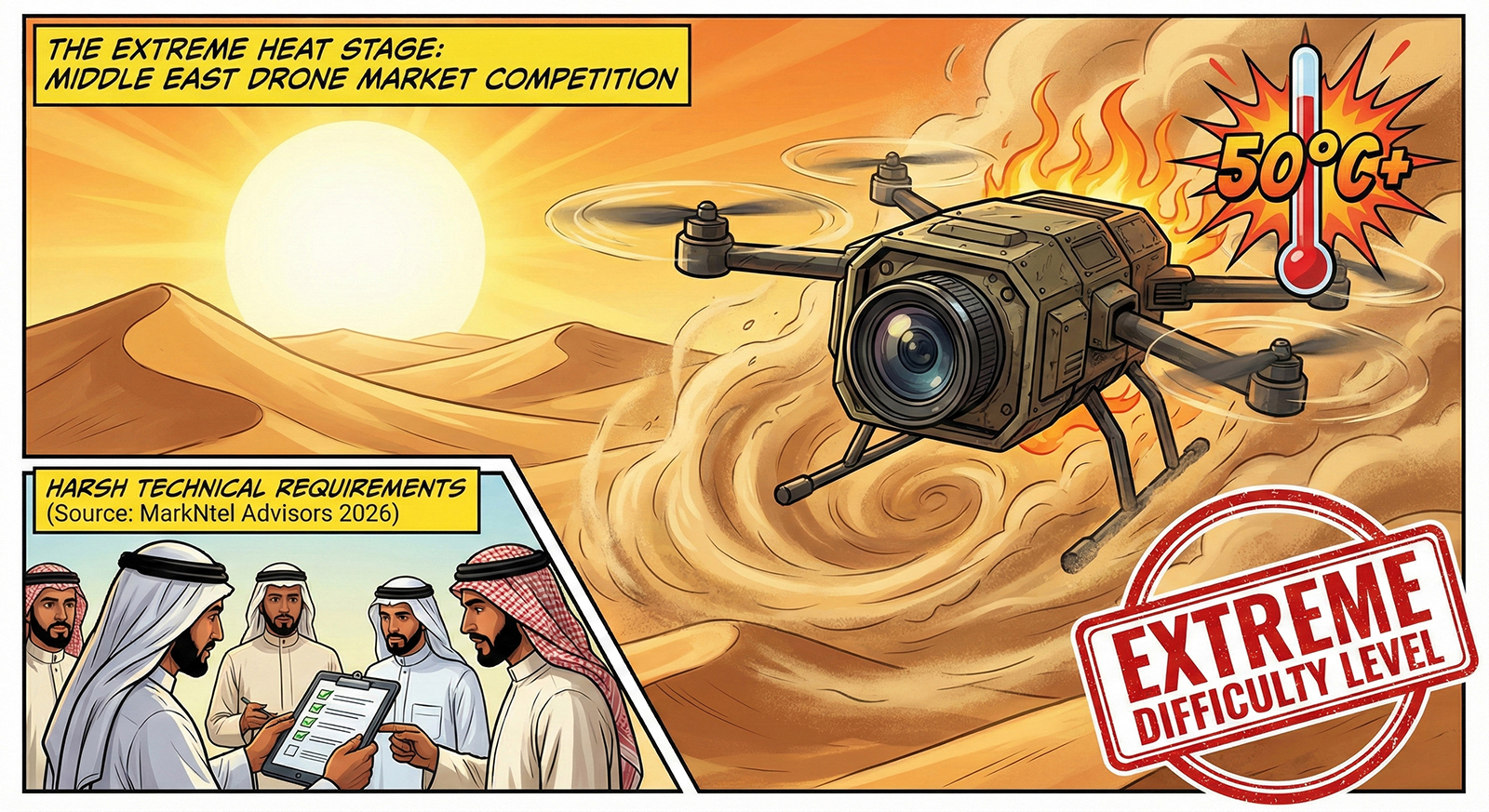
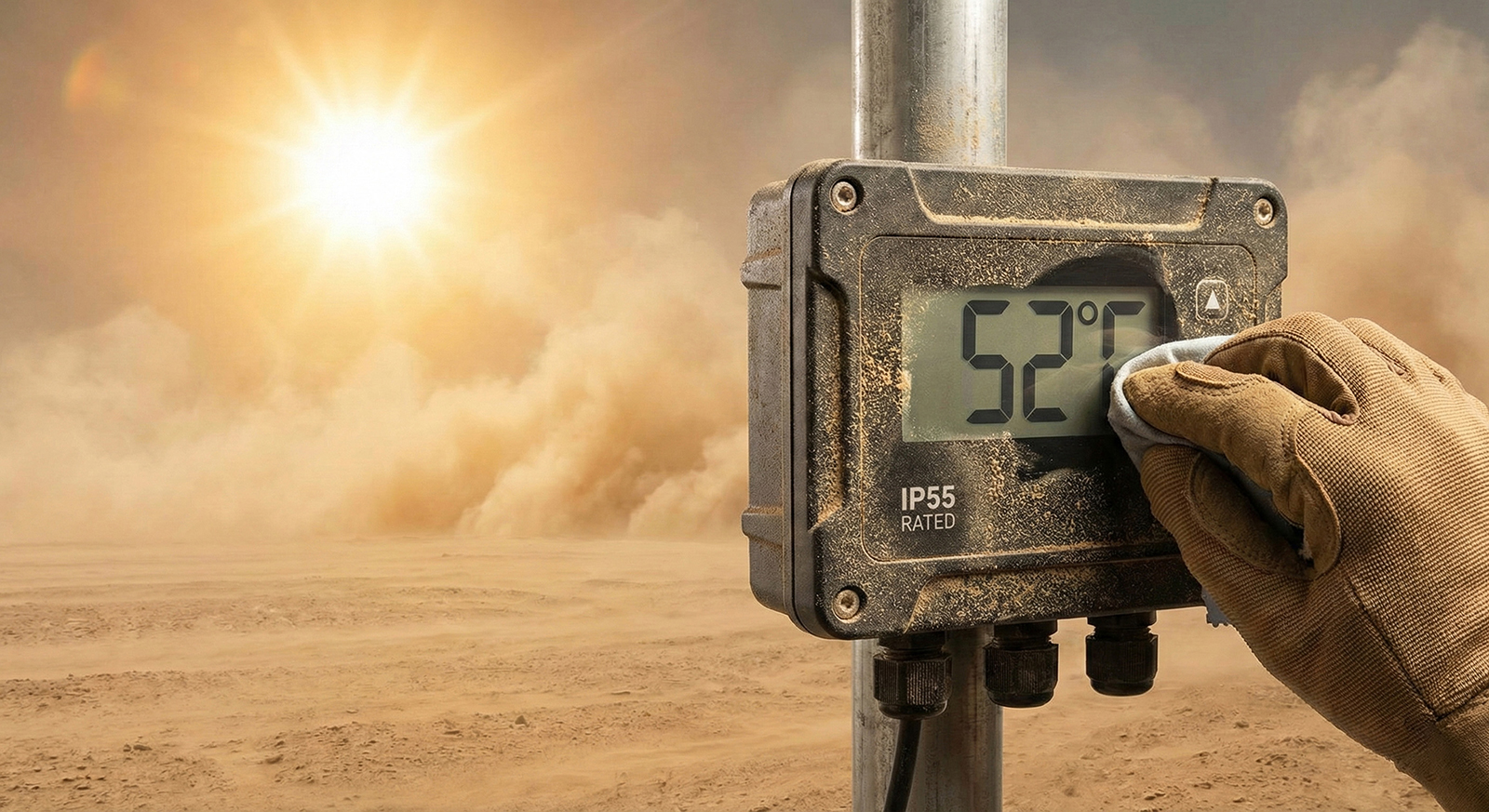
The "dual constraints" of heatwaves and sandstorms: Here, equipment must withstand temperatures exceeding 50°C—a critical survival threshold—and meet IP55 or higher protection standards to avoid failure in the pervasive and intense sandstorms.
The "all-round warrior" of the desert: Faced with pipeline inspections and border monitoring spanning hundreds of kilometers, Middle Eastern customers exhibit a strong "preference for specific drone models." To balance long-endurance operations with takeoff and landing in complex terrains, vertical takeoff and landing (VTOL) fixed-wing models, characterized by "runway-free operation and ultra-long endurance," have become a rigid standard in local tenders. In this land, only the most resilient "steel birds" can penetrate the heatwaves and serve as technological vanguards safeguarding desert security.
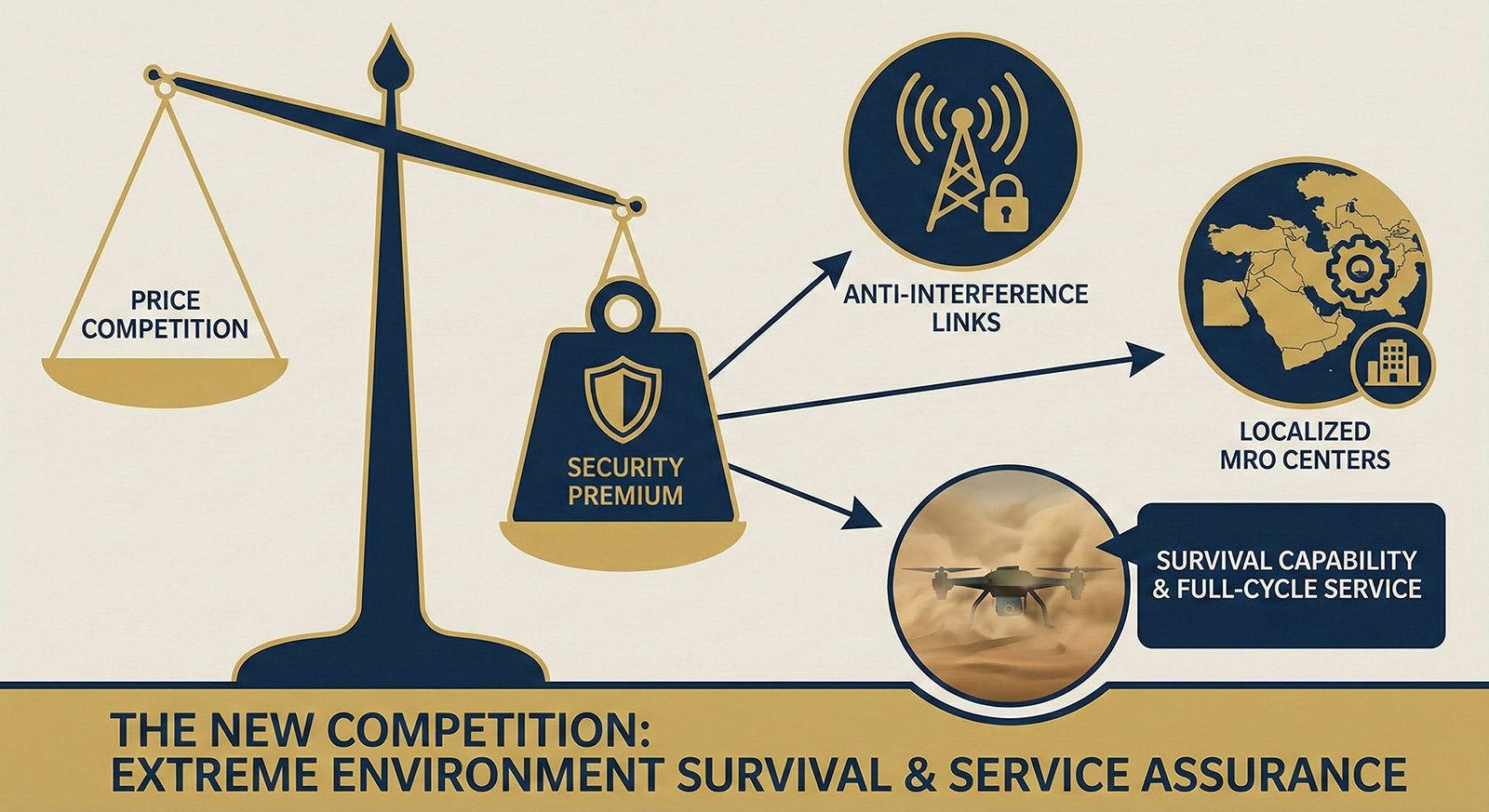
Additionally, due to geopolitical tensions, buyers here are willing to pay a high premium for "security." Systems with anti-interference links and brands capable of providing localized maintenance, repair, and overhaul (MRO) services often secure the majority of orders. In this market, competing solely on price is ineffective; what matters is survival capability in extreme environments and comprehensive lifecycle service support.