Dancing on the Blade's Edge of Noise and Efficiency
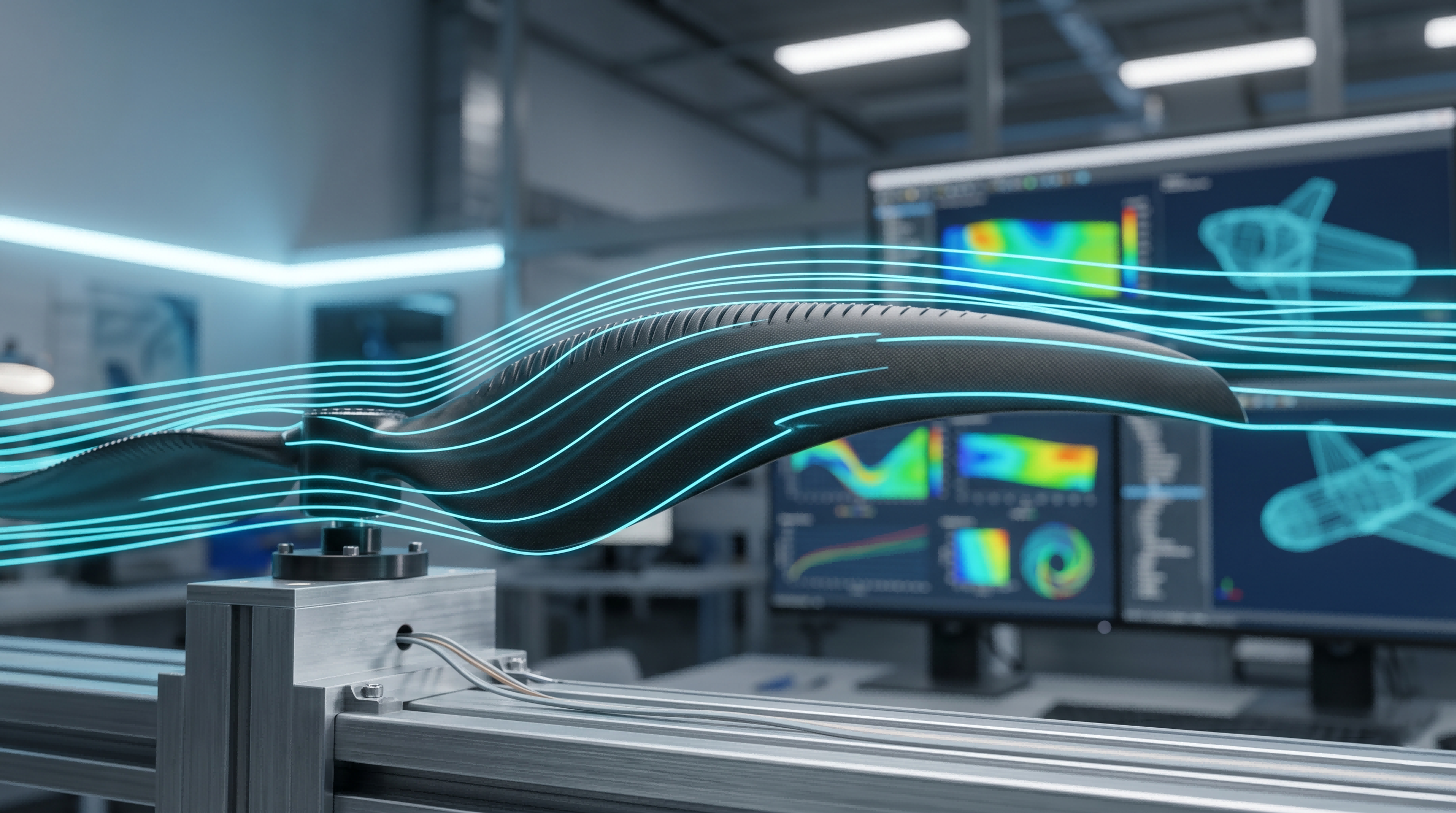
If you have ever observed a drone taking off in the stillness of early morning, you were likely disturbed by that piercing, high-frequency, and highly penetrative "buzzing" sound. For the general public, this sound might mean "disturbance"; but for professionals engaged in industrial reconnaissance, anti-poaching monitoring, or covert search and rescue, this sound represents "exposure." We must delve into the source of this sound: it is not the whine of the motor but the sound of air being painfully torn apart. When the tips of the propeller blades cut through the air at hundreds of revolutions per second, they create violent pressure differential changes at the ends of the blades, forming tip vortices. These high-speed rotating vortices constantly break and regroup in the air, producing that characteristic high-frequency oscillatory noise. This is not just an auditory negative trait but a black hole of energy loss—every decibel of noise is essentially energy that should have been converted into lift being wasted on air friction.
To address this pain point, the aeronautical engineering world is undergoing an "artistic revolution in sound." This is an extreme exploration spanning fluid mechanics and biomimetics. Engineers no longer view propellers as simple pieces of plastic but as finely tuned "fluid transformers." A representative inspiration comes from nature's silent killer—the owl. Owls can dive silently onto their prey because the edges of their feathers possess a unique serrated structure that breaks immense pressure into countless tiny, chaotic vortices that cannot form coherent noise. Inspired by this, the next generation of drone rotors adopts "asymmetric wing" and "swept-tip" designs. The brilliance of this design lies in how it alters the path of air sliding over the blades. By optimizing the curvature and surface microstructures at the ends of the propellers, the system can forcibly induce airflow from a noise-prone "turbulent" state into a smooth "laminar" flow. When air slides over the blade surface like silk, that shrill whistle is transformed into a low, gentle physical rhythm that is easily masked by environmental background noise.
However, controlling acoustic signatures can by no means be achieved through a single blade alone; it is a deep collaborative gamble involving the entire vehicle's power topology and control logic. Beyond aerodynamic noise, electromagnetic resonance from the motors and the power switching frequencies of the Electronic Speed Controllers (ESCs) are significant sound sources. Modern high-performance drone platforms have introduced FOC (Field-Oriented Control) algorithms. By precisely controlling the current phases flowing into the motor, these algorithms ensure that current is output as smooth sine waves, greatly reducing mechanical whining and electromagnetic tremors generated during motor commutation. Simultaneously, the research and development of airframe materials has entered the stage of "acoustic tuning." By compounding specific damping materials within the carbon fiber airframe, engineers can purposefully alter the structure's natural frequency, allowing the airframe to absorb residual micro-resonances like a sponge. This is a precision war fought on the decibel meter; every decibel dropped represents an exponential increase in the drone's "stealth" capability within complex mission landscapes, as well as a qualitative change in flight quality from "cheap mechanical feel" to "high-end industrial art."
The social value and tactical dividends of this "noise reduction" technology are immeasurable. Imagine a drone conducting patrols in a nature reserve late at night; if it barges into the forest airspace like a roaring monster, it will alert targets miles around long before it perceives any poachers. Conversely, a vehicle with low-observability characteristics can sweep past at an altitude of just twenty meters while the creatures below feel nothing more than a gentle breeze rustling through the treetops. In urban emergency rescue, low noise means the rescue craft can get closer to trapped individuals for communication or supply drops without causing secondary panic to the victims. The deeper gamble is that silence does not mean compromising efficiency. On the contrary, when airflow becomes smoother and resonance is effectively suppressed, the system's propulsion efficiency and battery life often receive a 5%-10% boost in return. This "engineering aesthetic" that pursues extreme balance is the charm of modern aeronautical design. We are not just building tools; we are creating "pseudo-organisms" that can silently blend into the rhythms of nature.