Reconstructing Carbon-Based Flight Intuition within Silicon Architectures
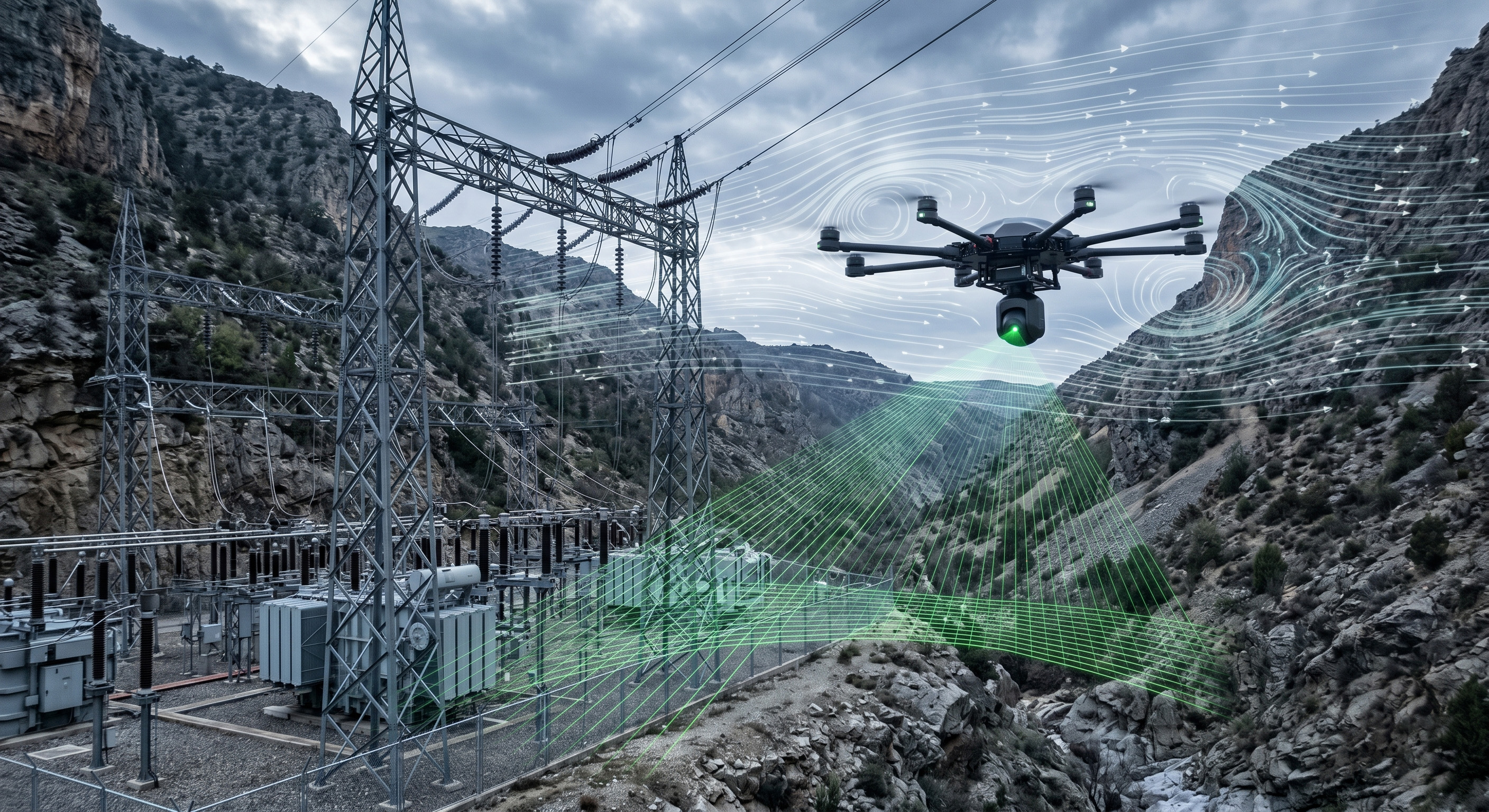
In the human imagination of the sky, mimicking the agility of birds has always been the most primal instinct. However, the development of modern drones is currently at a subtle tipping point: we are no longer satisfied with the rigidity of mechanical drives; instead, we are attempting to implant the dynamic optimization intuition of carbon-based organisms (such as raptors or insects) deep into the hardcore architecture of silicon-based power. This evolution is not a simple biomimetic replication of appearance but a reconstruction of underlying aerodynamic logic and control philosophy.
At physical boundaries characterized by extreme high pressure, high humidity, or turbulent shifts—such as mountain canyons or areas near ultra-high voltage substations—an aircraft needs to perceive subtle disturbances in airflow like a hawk, within milliseconds. Traditional Flight Control (FC) relies primarily on preset linear mathematical models, but in complex non-linear flow fields, this logic often suffers from lag. To achieve ultimate stability, modern high-performance platforms have begun introducing "perception-as-decision" mechanisms. By utilizing vector thrust and rapid feedback loops, these aircraft acquire a "muscle memory"-like anti-interference capability. This ability is the core of survival for drones performing sub-centimeter precision operations within narrow gaps.
The cost of this evolution is extremely high computational overhead and extreme challenges in structural design. To capture that near-biological instinctual stability, the system must complete the closed-loop computation of sensor fusion data within milliseconds. This is not just a race of control algorithms, but a demanding requirement for the "dynamic response" of airframe materials. When a vehicle performs high-precision laser scanning in strong canyon crosswinds, the minute elastic deformations of its carbon fiber skeleton are actually participating in the final correction of the flight attitude. This design concept, which deeply couples physical structure with digital logic, is breaking the rigid boundaries of traditional aeronautical design. By utilizing aerospace-grade composites and complex topology-optimized designs, the airframe can withstand intense vibrations from high-speed motors while protecting sensitive internal optical payloads from physical deformation.
This deep technological integration is, in fact, an answer to a long-standing industry pain point: when the complexity of the operating environment exceeds the logical upper limit of preset programs, how can technology maintain its "certainty"? The answer lies in biomimetic Resilience. By applying Deep Reinforcement Learning (DRL) to dynamic control, drones are beginning to demonstrate a degree of adaptive evolution. Their approach to handling unknown airflows or partial propulsion failure no longer relies solely on hard-coded PID adjustments but showcases a decision-making intuition based on massive simulation training.
This leap from "rule-driven" to "intuition-driven" is the ultimate threshold for low-altitude vehicles moving toward fully autonomous operations. In future industrial scenarios, drones will no longer require human pilots to constantly monitor attitude indicators. They will autonomously perceive physical boundaries and even maintain stable landings using remaining power vectors in extreme cases, such as propeller damage. This survival wisdom, drawn from carbon-based life, is being perfectly translated into the control language of the silicon-based world, reshaping the cognitive limits of aerial operational stability. When silicon chips possess the agility of carbon-based organisms, drones will no longer be cold machines but "digital avatars" with physical senses, navigating the complex 3D world with ease.